
Set the goal first
Very few companies sell directly through their website. That is why partial successes on the way to a purchase count too, and each of them can be a goal.
- Contact form filled in
- PDF downloaded
- Newsletter subscription
- New followers on social media
- Enquiry by phone or e-mail
- Catalogue ordered
Not every goal can be measured. If a new customer comes into the shop and nobody asks how they found you, the link to the website is missing. Training your staff to ask is usually worth it.
Every second of loading time counts
Every second a visitor has to wait hurts the first impression and can make them leave. Loading time also matters for your Google ranking. You can measure it with tools such as Pingdom or Google PageSpeed.
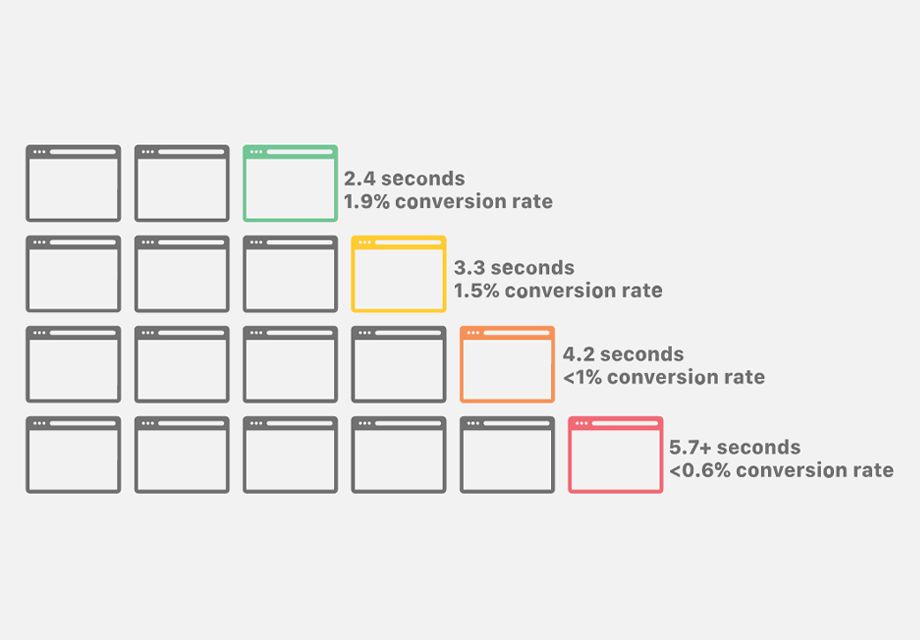
Faster loading, higher conversion rate.
Offer what your visitors are looking for
The obvious first. If you offer a product nobody needs, there is no point in improving the conversion rate. What matters is which target group your offer is relevant to. Once you know their needs, you can offer added value, even if it is not directly related to your offer.
- Property sales A mortgage rate calculator on the website.
- Nutrition advice A BMI calculator for your own values.
- Car rental A pointer to an app that lists all petrol stations.

Content marketing
In content marketing, selling stays in the background. Visitors get the content they are looking for, for example a blog with useful information or a collection of expert knowledge. That way you are found more often and build trust.
This works along the customer journey, the path a customer takes to a buying decision. Besides the website it often runs through phone calls, e-mail or social media. More contacts from the website means you can write to more prospects (with their consent) and accompany them along the way.
Lower the barrier to an enquiry
Every website has a contact form. Before someone fills it in, though, there is a barrier to overcome. So offer ways for visitors to get in touch with as little effort as possible.

- Chatbot It shows predefined questions and catches visitors outside opening hours too. A conversation starts without a name or e-mail address.
- Simplified forms If a product is currently unavailable, a single field for the e-mail address is enough, and the prospect is notified as soon as it is back. The same applies to price enquiries that first have to be calculated.
Find out which questions prospects have about your products, and answer them directly online where possible.
Design with a goal
A beautiful website alone brings no measurable value. Visitors should find what they are looking for and need, and the design is built around that.
Good design
Builds trust and convinces within the first few seconds. It looks high-quality, has consistent branding and shows relevant information as early as possible.
Bad design
Puts visitors off or overwhelms them, as in the example below with several menu bars and advertising banners stacked on top of each other.

One goal per page, one clear call to action

Calls to action are prompts a visitor can act on, such as a contact form or a button to download a PDF. Improving the conversion rate is often about leading visitors exactly there.
Ideally every subpage has its own clearly defined goal, and the call to action is aligned with it. Avoid offering too many options and making the content too complex.
Optimise for smartphones
Visits from mobile devices keep increasing, but the conversion rate there is lower. We know this from experience.

- Optimise loading times for mobile devices
- Add click to call
- Present product details simply and attractively
- Address security concerns
- Evaluate SMS, WhatsApp and push notifications
- Offer simple navigation
- Simplify text input, for example with autocomplete in search or input in several steps
- A clean responsive design
Ask your visitors

A website is not a one-way street. With surveys or feedback tools you find out what your visitors are missing, and you can keep optimising in a targeted way.
3 questions serve as a rough guide. What are you looking for? Did you find it? If not, why not?
How to measure the conversion rate
With Google Ads (formerly AdWords) measuring is a must, but even without paid advertising it pays to know the numbers. One of the most important tools is Google Analytics. Add a tracking code to every form, and your statistics show which share leads to a conversion and which path those prospects took beforehand.
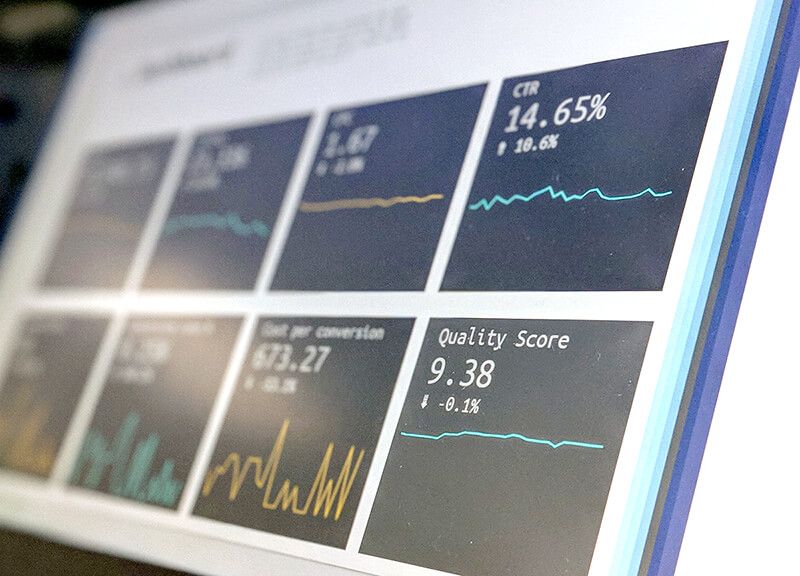
With event tracking you can also set intermediate goals:
- How many visitors scroll all the way down a subpage?
- How often is the PDF download clicked?
- How often is a product put in the basket and then not ordered?
- How often is a form filled in and not sent?
Even phone calls from website visitors can be measured, for example with free Google forwarding numbers for Google Ads.
What is a good conversion rate?
A good conversion rate is between 2 and 5%. How high it can be depends heavily on the goal, though. A free PDF is downloaded more quickly than a form with your full address is filled in. Comparing yourself with competitors therefore tells you little.
- Type of presence Online shops are lower on average than websites.
- Product Electronics or textiles reach far higher rates than industrial plants.
- Origin Visitors from Google Ads convert better than visitors from social media.
- Device Most visitors come on mobile, yet the rate is higher on desktop.

Keep the whole chain in view
Define your sales funnel and read it as a chain of conversion rates. Fill in the numbers from your own processes and you will quickly see where the most important lever is.
- 10’000 website visitors in the fictional example
- 200 of them fill in a form
- 2% conversion rate of this first stage
These 200 are then contacted, for example. Some of them qualify for marketing, meaning they meet the requirements to become customers. The next share shows how many of them have an immediate intention to buy.
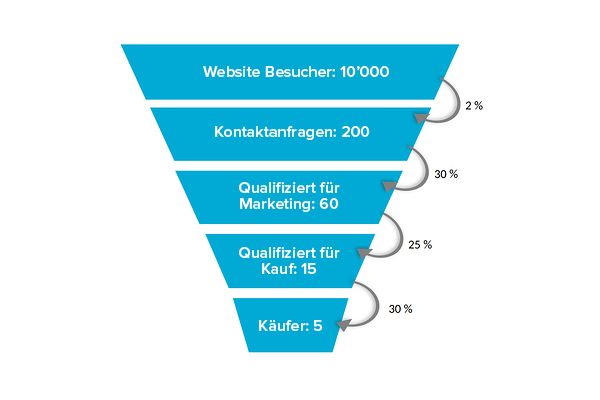
For your own website, break the number down with questions like these.
- How many visits lead to a contact enquiry?
- How many looked at a product and then left?
- How many contact enquiries turn into buyers?
- How big is the difference between desktop and mobile?
Measure and test first, then optimise and measure again.